Short answer
They are three different binder chemistries, not three brands of the same thing. Acrylic-cement is the entry-level option and leans on its sealer; epoxy-modified is hard but rigid and ambers under UV; polyurethane-mineral is the premium tier — hard-elastic, UV-stable, and the family that carries polyurethane in the decorative layer itself, not just the sealer. ATRIA's PURO system is polyurethane-mineral.
A quick note from me before you read this
When a client tells me they are "comparing microcement quotes," I ask one question back: "Do you know what binder is in each one?" Almost nobody does — and that is the whole game.
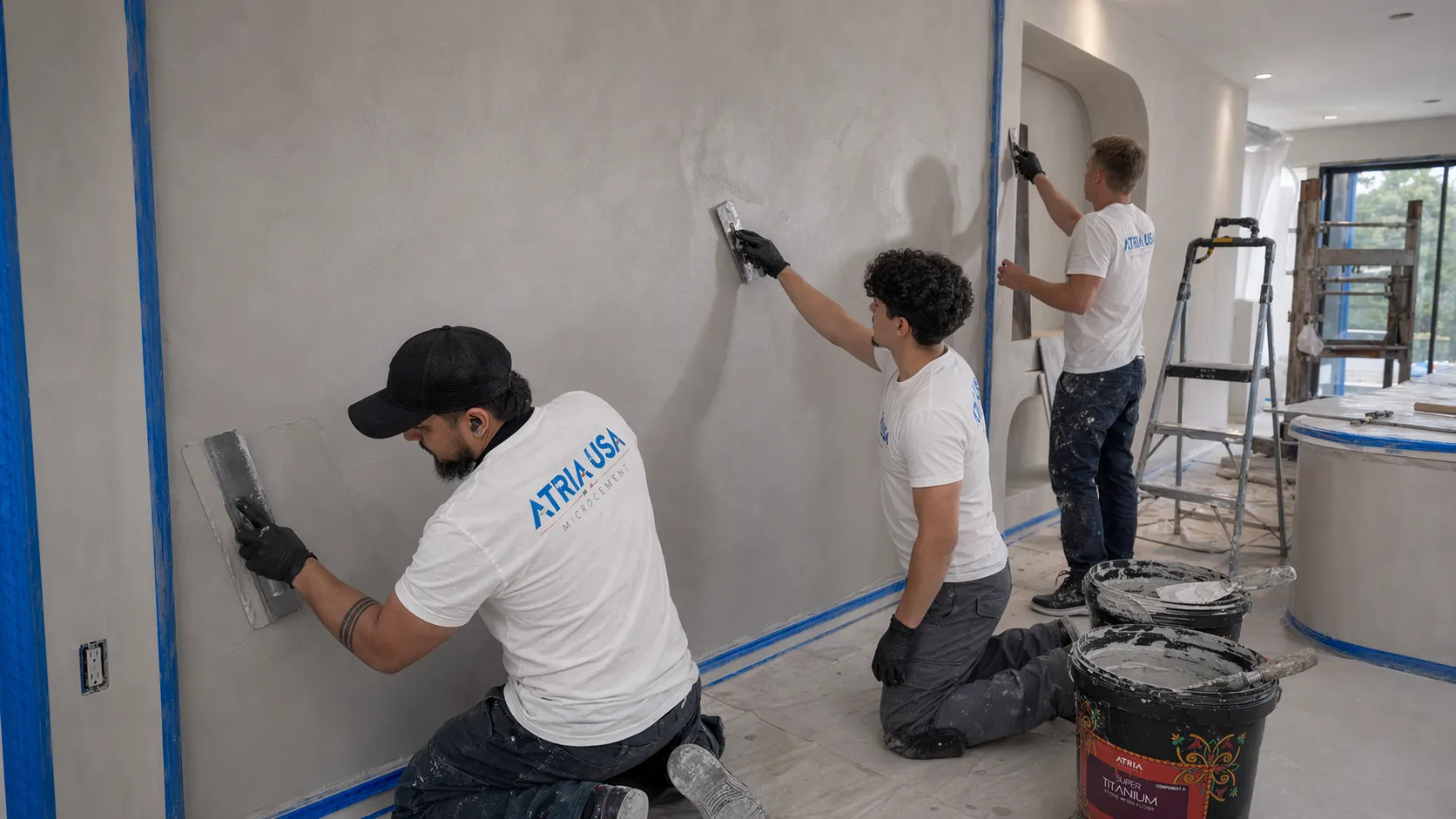
"Microcement" describes a format: a thin, seamless, hand-troweled mineral surface, two to three millimeters thick, applied over existing floors and walls without demolition. The format is shared across the market. What is not shared is the binder — the resin that holds the mineral together — and the binder decides how the surface flexes, wears, holds color, and behaves in a wet room.
There are three binder families: acrylic-cement, epoxy-modified, and polyurethane-mineral. They are genuinely different polymer chemistries — none is a "type" of another. This is the plain-English comparison, and the one question that tells you which one you are actually buying.
The three binders, honestly
Acrylic-cement
An acrylic polymer mixed with cement. It is the most common entry-level system and the easiest to apply, and it can look beautiful on a low-traffic feature wall. The trade-off is that acrylic binders are more rigid and lean heavily on the sealer for wear resistance — so the long-term durability of the finish is mostly the durability of whatever topcoat sits on top of it.
Epoxy-modified
Epoxy resin does the binding, or a clear epoxy is used as an aggressive topcoat. Epoxy is hard and chemically resistant, which makes it genuinely useful in industrial and garage settings. But it tends to be rigid and brittle at the edges, so it can crack where the substrate moves, and it is well known to amber and chalk under UV. These are real systems, and they are often sold simply as "microcement," which is where a lot of confusion starts.
Polyurethane-mineral
A modified polyurethane resin bound with a mineral aggregate. Polyurethane is the elastomeric polymer used in running-shoe midsoles and automotive suspension bushings precisely because it bonds tightly while still flexing. Paired with a hard mineral aggregate and a UV-stable polyurethane topcoat, it is the premium decorative tier — hard and elastic, low in porosity, and color-stable. This is the family our PURO system belongs to.
The three binders at a glance
| Factor | Acrylic-cement | Epoxy-modified | Polyurethane-mineral (PURO) |
|---|---|---|---|
| Binder family | Acrylic polymer with cement | Epoxy resin (binder or aggressive topcoat) | Modified polyurethane resin in aqueous emulsion + mineral aggregate |
| Strength profile | Ease of use; budget walls; relies on the sealer for wear | Very hard but rigid and resin-heavy; industrial | Balanced, documented: base 42 ± 2 MPa, decorative 32 ± 2 MPa (EN 1015-11) |
| Flexibility / cracking | More rigid; sealer-dependent | Hard but brittle; movement can crack | Hard-elastic film that absorbs substrate movement |
| UV / color stability | Depends on the sealer; can dull or chalk | Ambers and chalks under UV | 2K-PU topcoat specified non-yellowing & UV-resistant |
| Where the polyurethane lives | In the sealer only, if at all | In the sealer only, if at all | In the decorative layer itself AND the topcoat |
| Best fit | Entry-level decorative walls | Industrial resin floors | Premium residential, hospitality, retail, floors & wet areas |
How do you tell which one you are being quoted?
You do not need to be a chemist. Ask for the current technical data sheet (TDS) and read the "Chemical Nature" line for two layers: the decorative coat and the topcoat.
Our SuperTitanium BC reads "modified polyurethane resins in aqueous emulsion." If the same line on another product reads "acrylic" or "epoxy resin," you now know which family — and which trade-offs — you are buying. A manufacturer will publish that line on request; if the answer is "it's proprietary," ask again until you have it. For a full side-by-side method, see how to compare microcement systems by TDS, and for the category overview, is all microcement the same?
Where ATRIA sits — and the one distinction that matters
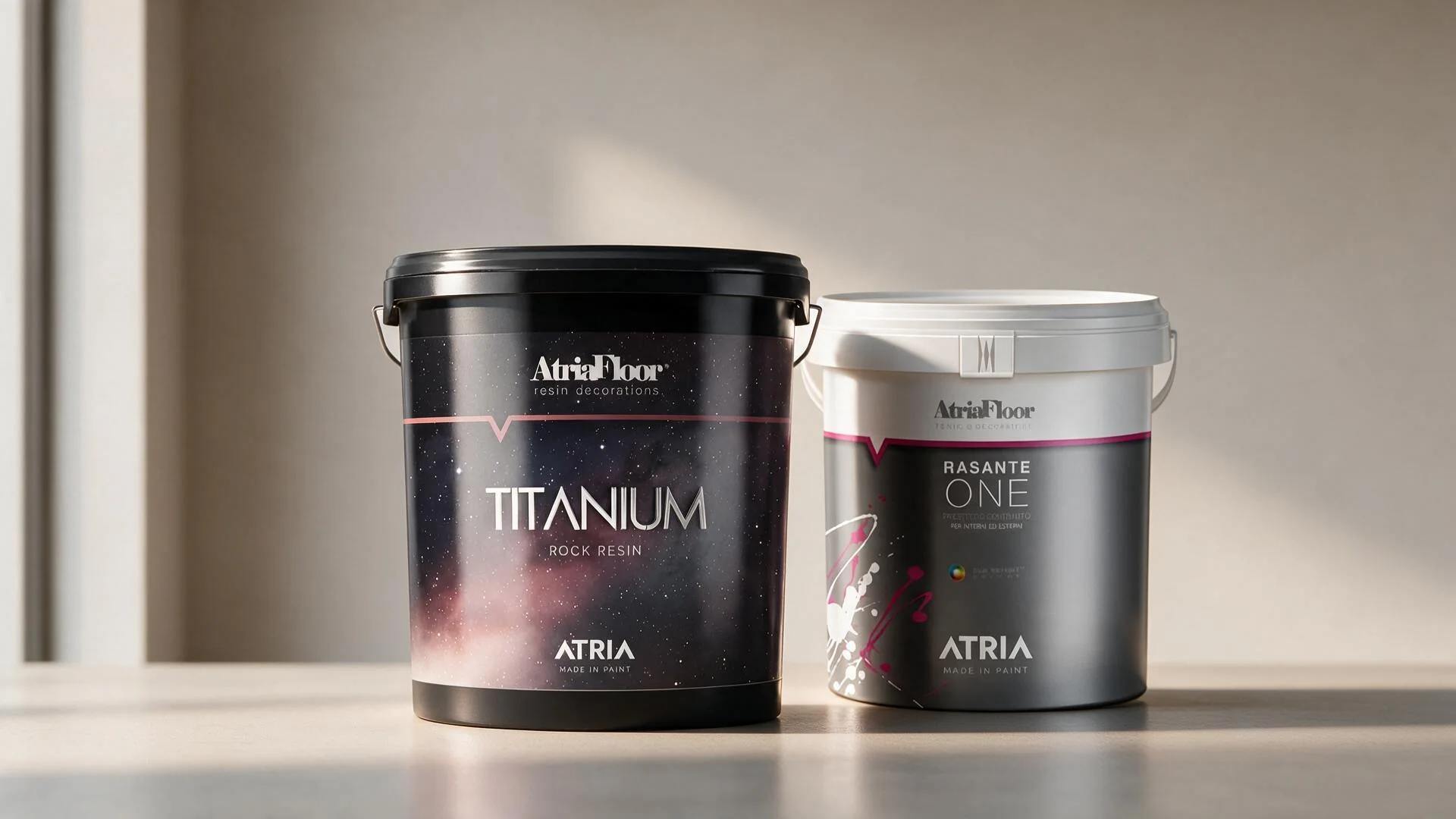
Our PURO system is a layered build around a polyurethane-mineral decorative coat: an Atriafloor primer, a cementitious base coat (Rasante One, 42 ± 2 MPa compressive at 28 days), the SuperTitanium BC decorative coat — modified polyurethane resin in aqueous emulsion with a quartz, marble sand, and Etna volcanic mineral blend (32 ± 2 MPa compressive at 28 days per EN 1015-11, Shore D above 65, hard-elastic and closed-pore) — and a two-component polyurethane topcoat, New Atriapol Antibacterial, specified as non-yellowing and UV-resistant and tested to ISO 22196:2011.
Here is the distinction I will put my name to: ATRIA carries polyurethane in the decorative microcement layer itself — not just in the topcoat — and no microcement system we have verified, TDS in hand, does the same. Many systems marketed as "polyurethane microcement" put the polyurethane only in the sealer on top. Ours runs through the finish. Ask any supplier to show you the same, layer by layer, in their TDS.
Frequently asked questions
What is the difference between polyurethane, acrylic, and epoxy microcement?
They are three different binder chemistries sold under the same word. Acrylic-cement microcement uses an acrylic polymer with cement and leans on its sealer for wear. Epoxy-modified microcement uses epoxy resin, which is hard but rigid and prone to ambering under UV. Polyurethane-mineral microcement uses a modified polyurethane resin with a mineral aggregate, giving a hard-elastic film that flexes with the substrate. The binder, not the word "microcement," decides how the finish ages.
Which type of microcement is best for floors?
For floors that must take traffic and movement, a polyurethane-mineral system on a documented cementitious base is the premium choice, because the decorative layer is hard-elastic rather than brittle and the topcoat is UV-stable. Epoxy is very hard but rigid and can crack where the substrate moves; acrylic-cement depends heavily on its sealer for wear. The right answer is the chemistry that pairs hardness with flexibility — that is the polyurethane-mineral tier.
Does epoxy microcement yellow?
Epoxy is well known to amber and chalk under UV, which is why epoxy floors in sunlit interiors often shift tone over time. The fix the industry uses is to protect epoxy with a UV-stable topcoat. A polyurethane-mineral system sealed with a UV-stable 2K polyurethane topcoat, like ATRIA’s Atriapol, is specified as non-yellowing.
Is polyurethane microcement better than acrylic?
For demanding floors, wet areas, and long-term color hold, polyurethane-mineral microcement outperforms acrylic-cement because it is hard-elastic, lower in porosity, and the polyurethane runs through the decorative layer rather than only the sealer. Acrylic-cement is a capable entry-level decorative system for low-traffic walls, but it relies on its topcoat for durability and is more rigid.
How do I know which type of microcement I am being quoted?
Ask for the current technical data sheet and read the "Chemical Nature" line for the decorative coat and the topcoat. ATRIA’s SuperTitanium BC reads "modified polyurethane resins in aqueous emulsion." If the line reads "acrylic" or "epoxy resin," you are buying a different chemistry with different trade-offs — and a manufacturer will publish that line on request.
Does ATRIA put polyurethane in the microcement or just the sealer?
Both. ATRIA’s SuperTitanium BC decorative coat is a modified polyurethane resin in aqueous emulsion with quartz, marble sand, and Etna volcanic mineral, and it is sealed with a 2K polyurethane topcoat (Atriapol, ISO 22196:2011). No microcement system we have verified, TDS in hand, carries polyurethane in the decorative layer itself the way ATRIA does — most put polyurethane only in the sealer, if at all.
Go deeper
About the author
Enzo Atria
Owner & 2nd-generation lead, Colorificio Atria S.r.l. · Partanna, Sicily
Enzo leads Colorificio Atria, the Italian manufacturer behind the PURO polyurethane-mineral microcement system and the VENEZIANO Venetian plaster collection. Over two decades he has built ATRIA into one of Europe's reference-standard microcement houses, with specification work in luxury residential, hospitality, and healthcare across Italy, the Middle East, and — more recently — the US through ATRIA USA. He oversees formulation, QC, and the certified installer training program out of the Partanna facility.
LinkedIn →