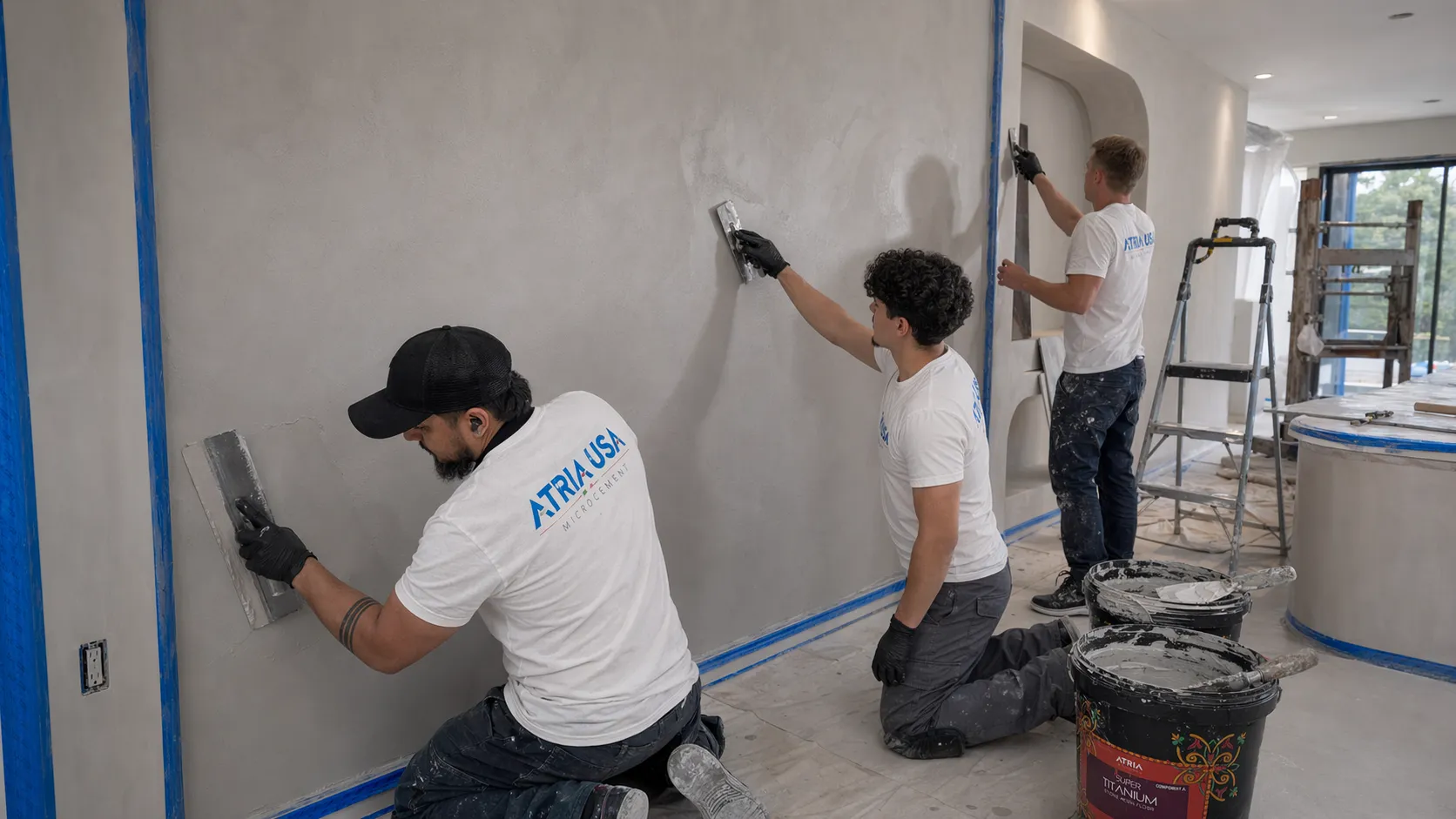
Short answer
Microcement is a thin composite — a resin binder, fine mineral aggregate, and pigment — not plain cement. The binder defines the type: acrylic-cement, epoxy-modified, or polyurethane-mineral. ATRIA PURO is polyurethane-mineral: SuperTitanium BC is a modified polyurethane resin blended with quartz, marble sand, and Etna volcanic mineral, over a 42 ± 2 MPa cementitious base and under a 2K-polyurethane topcoat.
A quick note from me before you read this
People ask me "what is microcement made of?" expecting a one-word answer — cement. It is the natural guess, and it is wrong. Microcement is not a thin layer of cement. It is a composite: a resin binder, fine mineral aggregate, and pigment, engineered to go on just two or three millimeters thick and still wear like a floor.
That distinction matters because the binder — the resin that holds everything together — is what actually decides how your surface behaves. Two products can both be sold as "microcement," look identical in a sample, and be made of completely different chemistry underneath. One ages beautifully; the other yellows or cracks. So let me show you what microcement is genuinely made of, ingredient by ingredient and layer by layer, and how to read it for yourself.
What is microcement made of? The three core ingredients
Strip any microcement down and you find the same three building blocks:
- A resin binder — the polymer that glues the mineral particles together, bonds the coat to the surface below, and defines which type of microcement you have. This is the single most important ingredient.
- Fine mineral aggregate — controlled-grain mineral powder that gives the coat its body, its hardness, and the fine texture you can burnish smooth.
- Mineral pigment — added for color, either pre-blended or dosed on site.
Those are mixed into a workable paste and troweled on in thin coats. On a floor the decorative microcement sits on top of a separate cementitious base coat, and the whole build is bonded with a primer below and protected by a topcoat above. So the honest answer to "what is it made of" is really two answers: what the decorative coat itself contains, and what the full installed system is built from. I will cover both.
Is microcement just cement?
No — and this is the most common misunderstanding. The name suggests a micro-thin cement, but a thin skim of ordinary cement would be brittle and would crack the moment the surface beneath it moved. What makes microcement work is the resin. The polymer binder gives a 2–3 mm coat enough flexibility and adhesion to be applied over tile, drywall, concrete, or an existing floor and stay intact.
In some families the binder is paired with Portland cement; in a polyurethane-mineral system, the decorative coat's binder is a polyurethane resin, and the cement-based material is kept in a separate structural base coat underneath. Same category word, very different recipe.
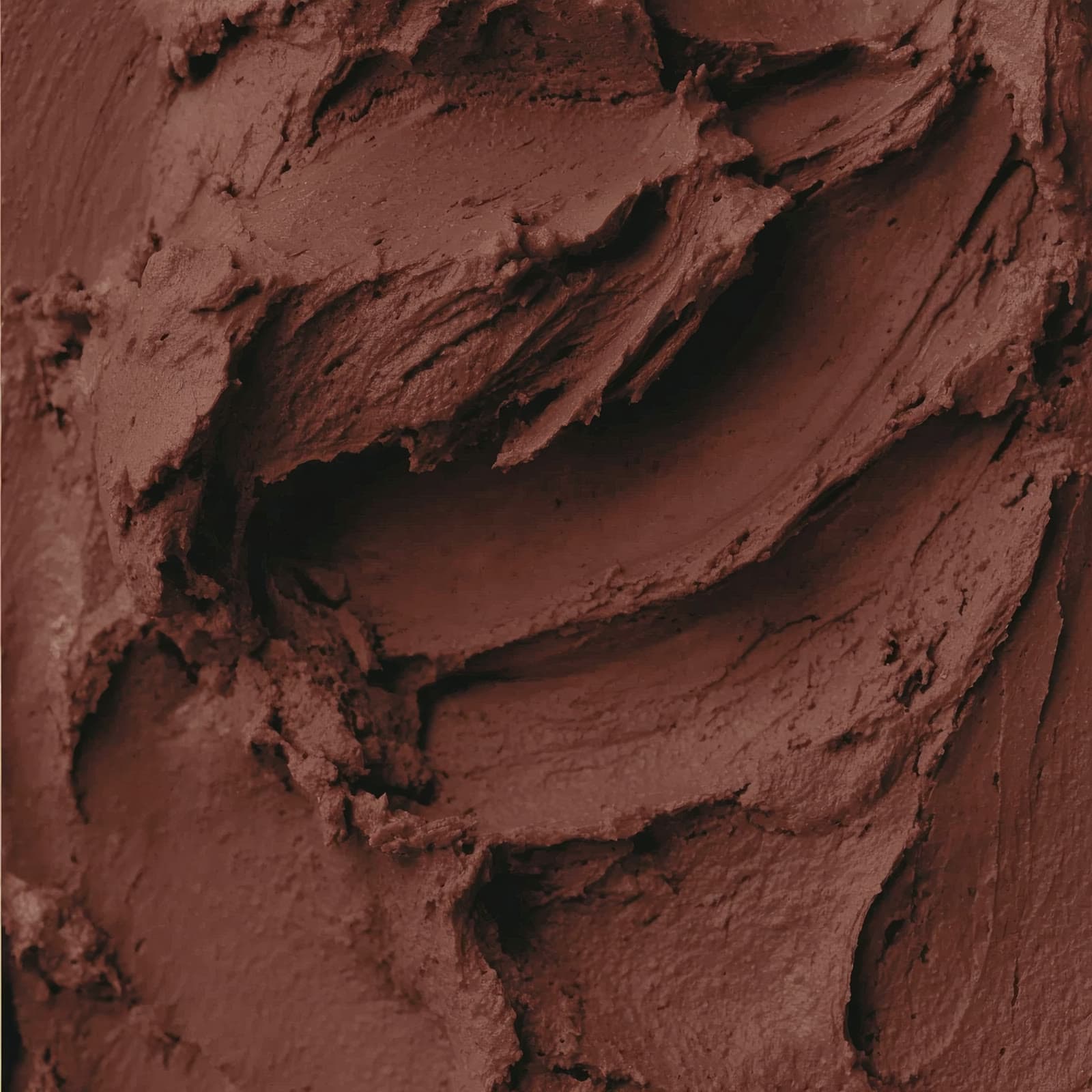
What binders are microcement made with?
There are three binder chemistries on the market, and the binder is what you are really choosing between. They are all "microcement," but they are made of different resins:
- Acrylic-cement — an acrylic (or styrene-acrylic) polymer blended with Portland cement and fine sand. The entry-level family: affordable and water-based, but more rigid and heavily dependent on its sealer for protection.
- Epoxy-modified — built on an epoxy resin. Hard and chemical-resistant, which is why it appears in industrial settings, but rigid and prone to ambering (a yellow shift) under UV light.
- Polyurethane-mineral — a modified polyurethane resin carrying the mineral aggregate. Hard-elastic rather than just hard: it resists abrasion while still flexing with the substrate, and it is UV-stable. This is the premium tier, and it is what ATRIA makes.
You can identify which one you are looking at from a single line on the Technical Data Sheet — the "Chemical Nature" or base line — without taking anyone's word for it.
What is the mineral aggregate in microcement?
The aggregate is the mineral body of the material — the part that gives a cured coat its hardness and the velvety, stone-like texture. In ATRIA's SuperTitanium BC decorative coat that aggregate is a controlled blend of quartz, marble sand, and Etna volcanic mineral:
- Quartz — one of the hardest common minerals; it does the heavy lifting on abrasion and scratch resistance.
- Marble sand — a fine, workable mineral that lets the coat be troweled thin and burnished to a smooth, seamless surface.
- Etna volcanic mineral — adds density and mechanical interlock, helping the coat key together into a dense, closed-pore film.
Grain size is held within a controlled range so the finish stays thin, smooth, and consistent batch to batch.
What each type of microcement is made of
| Microcement family | What it’s made of | Behavior in service |
|---|---|---|
| Acrylic-cement | Acrylic / styrene-acrylic polymer + Portland cement + fine sand | Affordable, water-based; more rigid and sealer-dependent |
| Epoxy-modified | Epoxy resin + mineral filler | Very hard and chemical-resistant; rigid, ambers under UV |
| Polyurethane-mineral (ATRIA PURO) | Modified polyurethane resin + quartz, marble sand & Etna volcanic mineral | Hard-elastic, closed-pore, UV-stable; polyurethane in the decorative layer itself |
What is ATRIA microcement made of, layer by layer?
A finished ATRIA PURO surface is not one material but a short stack, each layer made of something different and doing a specific job:
- Primer (Atriafloor Primer or Primerquarz) — bonds the system to the substrate and regulates absorption.
- Cementitious base (Atriafloor Rasante One) — the structural, cement-based layer where it is needed, rated 42 ± 2 MPa compressive strength at 28 days (EN 1015-11). This is the part of the system that is genuinely "cement."
- Decorative coat (SuperTitanium BC) — the microcement you actually see: a two-component modified polyurethane resin in aqueous emulsion, blended with quartz, marble sand, and Etna volcanic mineral. It cures hard-elastic and closed-pore, with Shore D hardness above 65.
- Topcoat (New Atriapol Antibacterial) — a two-component polyurethane sealer, non-yellowing and UV-resistant, tested to ISO 22196:2011. In wet areas the system is built over a code-compliant waterproofing layer first; the coating itself is not the waterproofing membrane.
That layered makeup is also where our distinction lies: ATRIA carries polyurethane in the SuperTitanium BC decorative layer itself — not only in the topcoat — over a documented 42 ± 2 MPa cementitious base and under a 2K-polyurethane antibacterial topcoat. No microcement system we have verified, TDS in hand, combines all three; ask any supplier to show you the same, layer by layer, in their own data sheet.
How to check what a microcement is made of
You never have to guess. Ask the supplier for the current Technical Data Sheet and read four things:
- The binder — the "Chemical Nature" or base line. It should name polyurethane, epoxy, or acrylic for the decorative coat, not just the sealer.
- The aggregate — a complete sheet describes a controlled-grain mineral content.
- The topcoat chemistry — and whether it is specified UV-stable and non-yellowing.
- Mechanical data with standards — hardness, adhesion, and abrasion figures, each with a test method (e.g. EN 1015-11, EN 1542, ISO 22196:2011).
If a manufacturer cannot tell you what the decorative coat is made of from its own documents, that is your answer. A premium polyurethane-mineral system publishes every layer.
Frequently asked questions
What is microcement made of?
Microcement is a thin polymer-mineral composite, not plain cement. Every microcement combines three core ingredients: a resin binder that holds it together and defines the category, fine mineral aggregate that gives it body and hardness, and mineral pigment for color. It is applied in thin troweled coats — usually over a primer, and on floors over a cementitious base — then sealed with a protective topcoat. The binder is the part that varies most: acrylic-cement, epoxy-modified, and polyurethane-mineral systems are all called microcement, yet they are made of different resins and perform very differently.
Is microcement just cement?
No. Despite the name, microcement is a polymer-mineral composite rather than plain cement. The resin binder is what lets a 2–3 mm coat flex and bond over tile, drywall, or an existing floor without cracking the way a thin skim of ordinary cement would. In a polyurethane-mineral system the binder in the decorative coat is a modified polyurethane resin, not Portland cement — the cementitious material lives in the separate base coat beneath the finish.
What is the aggregate in microcement?
The aggregate is the fine mineral content that gives microcement its body, hardness, and surface texture. ATRIA's SuperTitanium BC decorative coat is blended with quartz, marble sand, and Etna volcanic mineral — quartz for hardness and abrasion resistance, marble sand for a fine, workable body, and the volcanic mineral for density and mechanical interlock. The grain size is controlled so the finish can be troweled thin and burnished smooth.
What binder is ATRIA microcement made with?
ATRIA's SuperTitanium BC decorative coat is made with a two-component modified polyurethane resin in an aqueous (water-based) emulsion, blended with selected mineral aggregate. It cures into a hard-elastic, closed-pore film with Shore D hardness above 65 and 32 ± 2 MPa compressive strength at 28 days (EN 1015-11). The system is finished with New Atriapol Antibacterial, a two-component polyurethane topcoat tested to ISO 22196:2011. Carrying polyurethane in the decorative layer itself — not only in the sealer — is what places it in the premium tier.
Is microcement water-based?
It depends on the binder. ATRIA's SuperTitanium BC decorative coat is a water-based (aqueous emulsion) modified-polyurethane system, and the New Atriapol topcoat is two-component and water-dilutable per its TDS. Water-based binders are common in the polyurethane-mineral and acrylic-cement families, while some epoxy-modified systems are solvent-based. Always confirm the carrier and any safety data from the manufacturer's current TDS and safety data sheet.
How can I tell what a microcement is made of?
Read the manufacturer's Technical Data Sheet. The "Chemical Nature" or base line names the binder — look for polyurethane, epoxy, or acrylic — and a complete TDS also describes the aggregate as a controlled-grain mineral, names the topcoat chemistry, and lists mechanical data with test standards. If a supplier cannot show you a TDS that names the binder in the decorative coat itself, and not just the sealer, you cannot really know what the finished surface is made of. No microcement system we have verified documents its decorative-layer binder as polyurethane the way ATRIA PURO does; ask any supplier to show you the same in their TDS.
Go deeper
About the author
Enzo Atria
Owner & 2nd-generation lead, Colorificio Atria S.r.l. · Partanna, Sicily
Enzo leads Colorificio Atria, the Italian manufacturer behind the PURO polyurethane-mineral microcement system and the VENEZIANO Venetian plaster collection. Over two decades he has built ATRIA into one of Europe's reference-standard microcement houses, with specification work in luxury residential, hospitality, and healthcare across Italy, the Middle East, and — more recently — the US through ATRIA USA. He oversees formulation, QC, and the certified installer training program out of the Partanna facility.
LinkedIn →