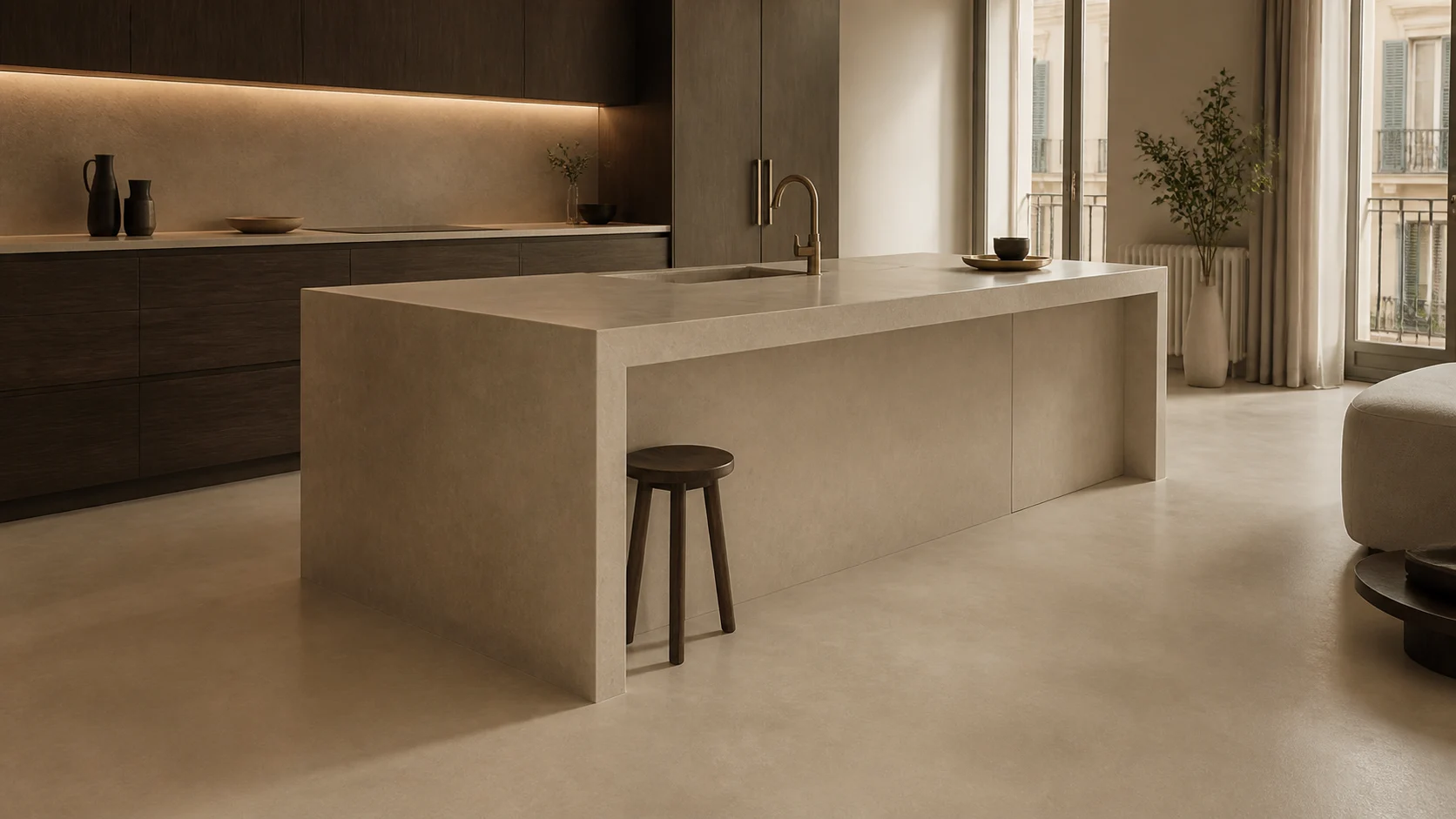
A quick note from me before you read this
Pricing is the most-asked question I get, and it's the one the industry is most vague about. Search "microcement cost" and you'll get ranges like $8 to $75 per square foot — a range so wide it's basically useless to anyone trying to budget a project.
The reason the range is so wide is that "microcement" covers three totally different products (see our polyurethane microcement piece for why that matters) AND four totally different installation approaches. A $12 per square foot quote and a $35 per square foot quote can both be honest numbers, for different products, under different conditions.
So this is the piece I wish every American client read before they called us for a quote. It lays out what ATRIA USA actually charges, what drives the number up or down, and what a "cheap microcement" quote usually means under the hood.
If you're scoping a project and want a straight number to budget against, the short version is: plan on $14–$34 per square foot for floors, $18–$36 per square foot for walls, $26–$50 per square foot for ceilings, with your band inside those ranges determined by the substrate you're working over. The rest of this post explains why.
The three variables that actually drive the price
Everything else is noise. The only variables that move the needle on microcement cost are:
1. The binder chemistry. Acrylic-cement microcement sells for $8–$15 per square foot installed. Epoxy-modified runs $12–$20. Polyurethane-mineral — the premium tier ATRIA builds — starts at $14 per square foot for floors in our entry-level spec. A $10 per square foot quote is not a negotiating win; it's telling you which product you're getting. If you're comparing apples to apples, compare binder to binder.
2. The substrate. This is the one most clients don't see coming. A sound concrete slab is the easiest substrate to microcement over. A tile floor requires diamond grinding to create a mechanical key before any primer goes down. MDF, plywood, OSB, and radiant-heat slabs require fiberglass mesh reinforcement and an extended cure protocol because they move more than concrete. Each step up in substrate complexity moves you up a tier — and the tier determines the base price, substrate preparation, and layer build required for the project.
3. The surface type. Floors, walls, and ceilings each have their own labor profile. Floors are the simplest — you're working with gravity, and a skilled installer can cover ground quickly. Walls add vertical labor, edge work, and more fussy burnishing to get the polished finish right. Ceilings add overhead application, which roughly doubles the labor hours per square foot compared to floors.
Everything the industry talks about — color choice, project size, regional labor rates, "luxury brand markup" — matters, but none of it drives the number the way those three do.
ATRIA USA's tier architecture, plain English
We publish our pricing as starting-from anchors tied to three installation tiers. The tier is determined by substrate, not by marketing — you don't pick your tier, your substrate picks it for you.
Fast tier — $14–$18/sf floors, $18–$22/sf walls, $26–$32/sf ceilings
Fast tier is for sound, clean, predictable substrates: finished concrete slabs, polished concrete, screeded floors, and properly primed drywall. It is the simplest system build because the substrate is already stable and ready for finish work.
This is where many straightforward ATRIA USA residential projects land. A homeowner with a well-built newer home, a good concrete slab, and standard interior walls is often a Fast tier project.
Standard tier — $19–$24/sf floors, $23–$28/sf walls, $32–$38/sf ceilings
Standard tier kicks in when the substrate needs more preparation: existing tile that requires diamond grinding and mechanical keying, backer board, gypsum self-leveler, or plastered walls with more complex texture. It adds the preparation and base build needed to make renovation substrates perform like a stable finish surface.
Most renovation work lands here because most renovation means you're working over whatever the previous owner put down. This is the most common tier for bathroom and tile-overlay projects.
Full Build tier — $25–$34/sf floors, $29–$36/sf walls, $40–$50/sf ceilings
Full Build is for the hardest substrates and the most demanding environments: MDF, plywood, OSB, radiant-heat slabs, steel, commercial wet rooms, structural transitions, heavy traffic, or wheeled-load floors. The system includes Glass Mat 300 fiberglass mesh reinforcement embedded in the first rasante pass, plus additional build-up coats and extended cure protocol.
This is usually the high-end renovation that's replacing everything down to the studs, the whole-home open-concept build on engineered substrate, or commercial and hospitality work with heavier performance demands.
Finish and decorative options
All ATRIA microcement projects access our full 16-color PURO palette, with custom color-matching to NCS, RAL, and major paint-brand references available on request.
- Titanium — the single-component polyurethane decorative resin, a clean and reliable choice for the majority of interior residential work (available at every tier)
- SuperTitanium BC — our two-component premium formula, engineered for bathrooms, wet rooms, and commercial-grade floors where higher mechanical resistance and the bicomponent chemistry matter most (available at every tier)
- Atriapol Antibacterial top coat — ISO 22196:2011 tested, UV-resistant, non-yellowing. Sealed into every project across all tiers.
Project minimums
Project minimums apply per tier to reflect the cost of mobilizing an ATRIA-certified crew for a real day's work. For smaller rooms, the minimum may matter more than the raw square-foot calculation. During consultation we walk you through the exact number for your tier and project type.
Real numbers from real projects
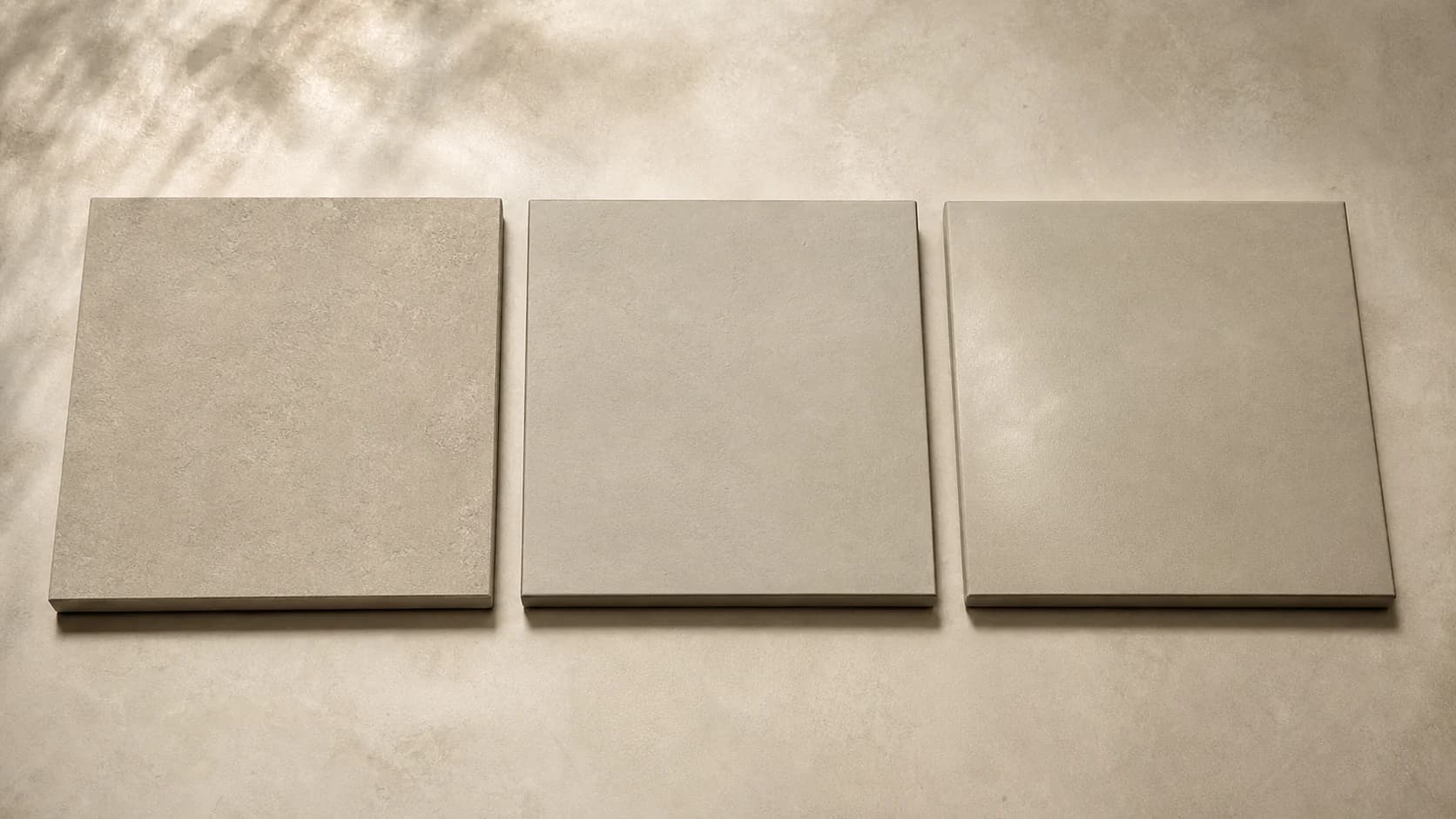
Anyone can quote a range. Here are representative ATRIA USA project estimates, rounded:
150 sq ft full bathroom, Standard tier, walls + floor + shower: $4,200–$6,500 all in. The range depends on whether the shower requires the waterproofing membrane (it usually does), how much tile we're grinding off first, and whether the homeowner wants the Titanium Superfino finish.
400 sq ft kitchen floor, Fast tier on sound concrete slab: $5,800–$7,200. Straightforward job. One-week turnaround including cure.
1,200 sq ft open-plan kitchen-plus-living-room floor, Fast tier: $17,000–$22,000. Scale economies kick in — the per-square-foot rate comes down because the mobilization cost is amortized over more area.
1,200 sq ft Full Build floor with custom color on radiant-heat substrate: $30,000–$40,000. Fiberglass mesh reinforcement, extended cure protocol, custom color match, SuperTitanium BC finish. This is the same square footage as the previous example but nearly double the price because the engineering is different.
800 sq ft master suite — floor, walls, shower, vanity top, ceiling feature, Standard tier: $22,000–$28,000. Multi-surface projects are where ATRIA shines and where the per-square-foot number starts looking competitive against stone tile and slab on a full-room basis.
Commercial restaurant floor, 2,400 sq ft, Full Build tier with SuperTitanium BC: $72,000–$88,000. The number looks high until you compare the full scope: substrate preparation, reinforcement, decorative finish, topcoat protection, and the reduced grout and joint maintenance that hospitality floors usually fight for years.
What "cheap microcement" usually means
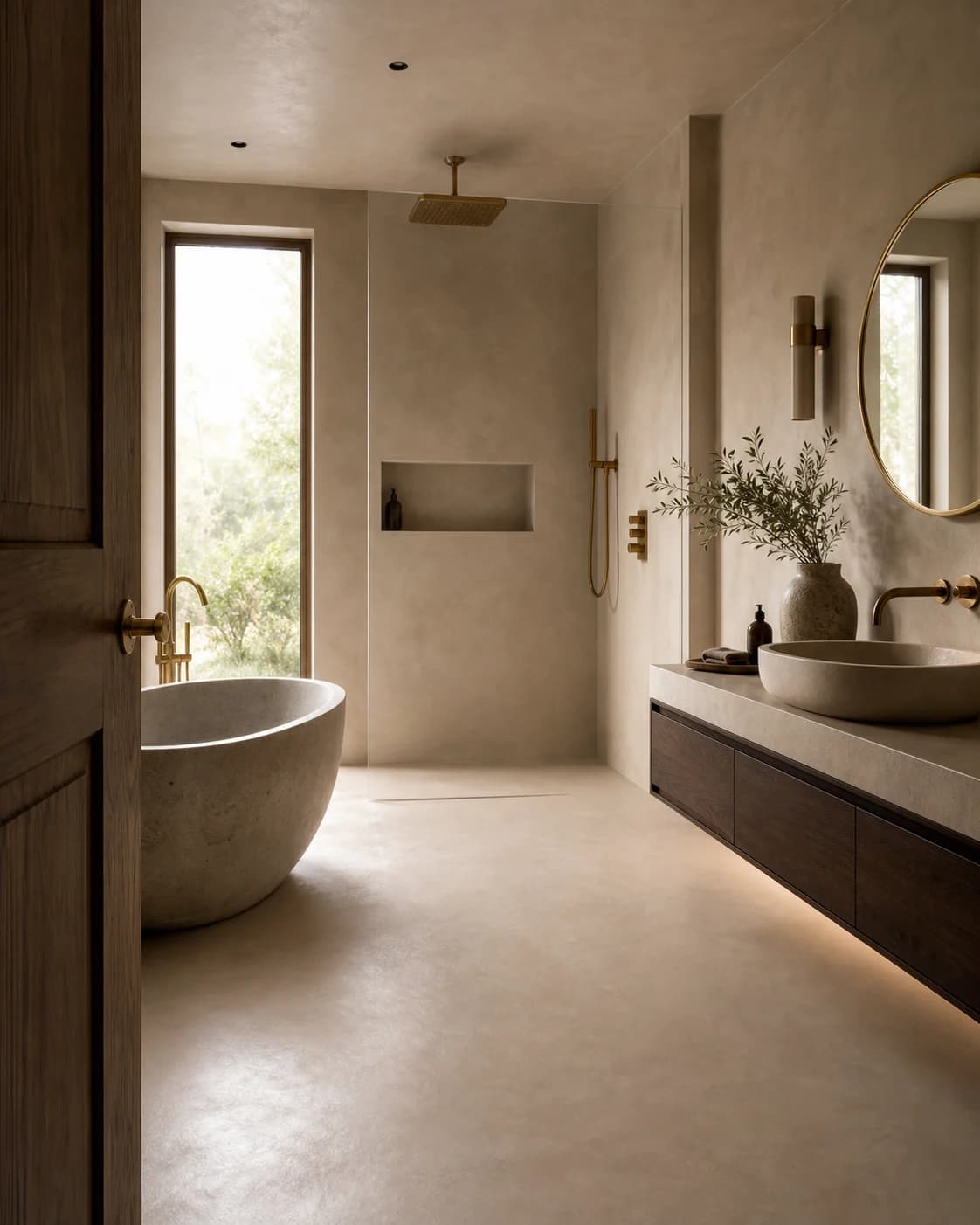
If you're getting quotes well below the numbers above, I want to help you understand what you're probably buying.
A quote at $8–$12 per square foot is usually acrylic-cement microcement. Acrylic-cement is fine for the right application — a dry living room floor, a commercial back-of-house space — but it's not what the marketing photos are usually selling. It is more vulnerable to substrate stress lines, it is not actually waterproof (water-resistant only), and its topcoat system may not be UV-stable. See our polyurethane microcement explainer for the full chemistry comparison.
A quote that doesn't include substrate prep is hiding the real number. Real microcement installation includes substrate assessment, prep (grinding, priming, sometimes patching), the layered application itself, and cure protection. A quote that lists only "microcement per square foot" without a line item for prep is either skipping the prep (which will fail) or adding it as an invoice change order after you've committed.
A quote with no written scope is not a complete quote. Premium microcement proposals should spell out the product system, substrate preparation, topcoat, cure protection, and any workmanship or product warranty terms in writing. If the quote does not name the products or define the installation scope, you are not comparing like for like.
A quote that can't name the products is a reseller, not an installer. Ask your installer to name the primer, the base material (the "rasante"), the color coat, and the top coat. A real installer knows these cold. A reseller will say "our microcement system." That's your signal to get another quote.
What drives ATRIA USA's price up or down
Within our tier architecture, the number moves based on a few specific factors. Here's what to expect:
Goes up:
- Projects under tier minimum (you pay the minimum regardless)
- Heavy substrate remediation — cracked slab, serious moisture issues, deep leveling needed
- Remote or high-labor-cost markets — we're a national supplier working through TX-based install teams and a network of certified installers, labor cost varies with region
Goes down:
- Scale — larger areas of the same surface type usually bring the per-sf rate down because setup and mobilization are spread across more square footage
- Simple substrate — virgin concrete slab in a new build is the cheapest-possible base
- Bundle multiple rooms — we offer better per-sf rates for projects that work several surfaces in one mobilization
- Single-tier project — if everything qualifies for Fast tier, the whole project is Fast tier pricing
- Timing — projects with flexible scheduling can sometimes be easier to crew-plan
The long-term cost math that actually matters
Installed cost is only half the story. Microcement is a finish you live with for decades if you pick the right product.
Acrylic-cement at $12/sf, useful life 7 years: that's $1.71 per square foot per year, plus the disruption cost of replacement (usually another $8–$12/sf to rip out and redo, plus the week you can't use the room).
Polyurethane-mineral at $22/sf, useful life 15–25+ years: that's roughly $1.10 per square foot per year at the low end. Less than the "cheaper" option on a per-year basis, with a much longer runway before replacement becomes part of the conversation.
Stone tile at $18/sf installed, useful life 20 years but with ongoing grout regrouting at year 5, 10, 15: about $1.15/sf/year once you include the regrouting labor.
Premium luxury vinyl at $8/sf, useful life 10–12 years: $0.70/sf/year but visible seams, dents under heavy furniture, not truly waterproof at the seams.
Microcement is only the expensive option at the moment of signing the contract. Over a longer ownership period, a properly installed polyurethane-mineral system can become one of the more cost-effective premium finished-floor options.
One more note from the real estate side: in the high-end US market, seamless Italian finishes are increasingly showing up on luxury listings as a differentiator. Designer-aware buyers recognize the finish as a premium install — the carry-forward value shows up in listing photography, in showings, and in how memorable the home is when buyers are comparing options.
The one question every client should ask before they sign
After twenty years of watching clients get burned by "cheap microcement" that fails within three years, here's the single question I tell everyone to ask:
"Can you name the five products in the system you're installing, and can you send me the technical data sheet for each one?"
A real installer has those TDS documents on hand. A reseller doesn't. If the answer is "it's our proprietary system" or "I don't have the TDS but the product is good, I promise" — that's your answer, and it's time to get another quote.
The rest of the cost conversation is the one above. The tier, the substrate, the surface type. Everything else is noise.
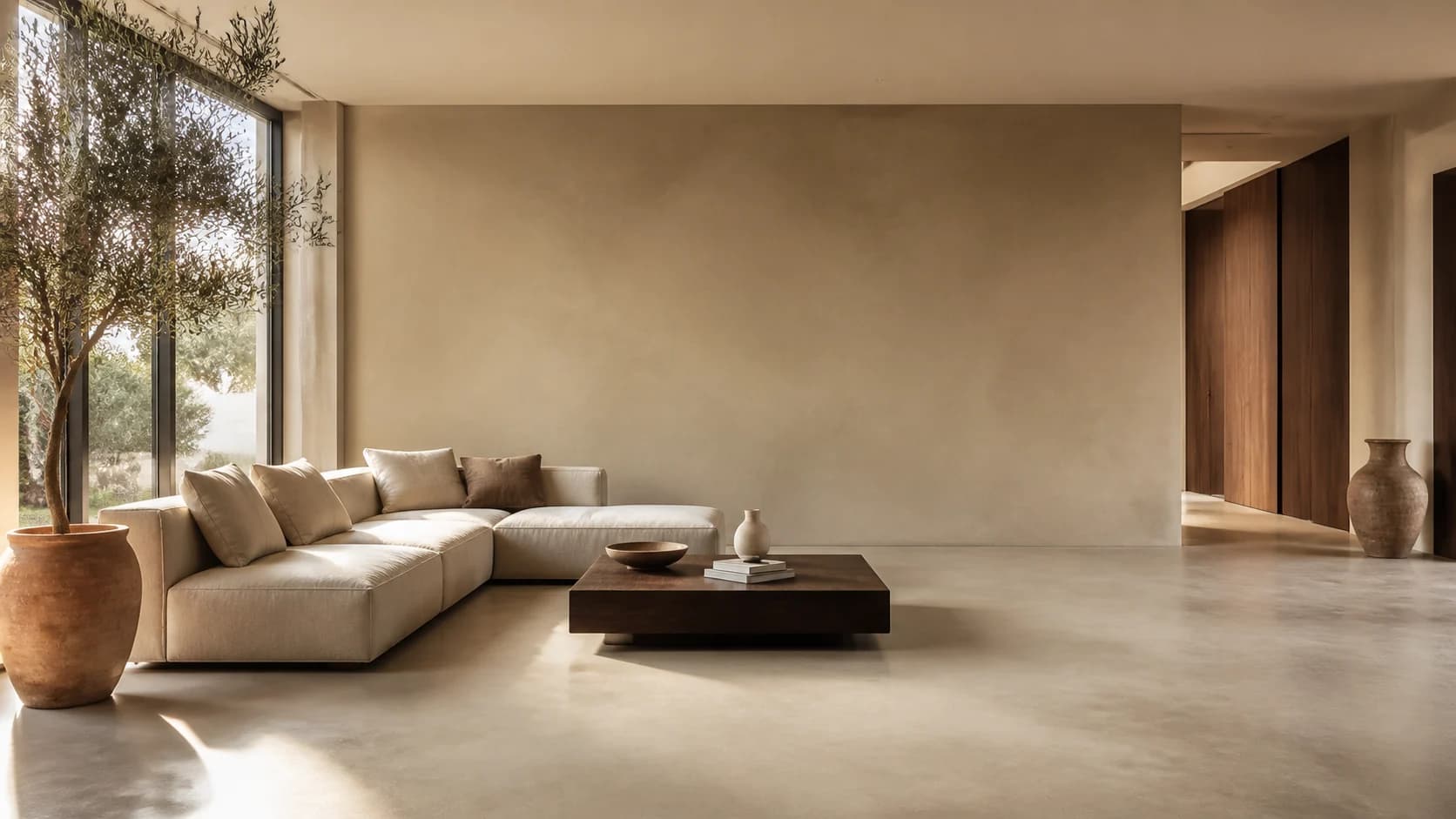
Two ways to move forward
Buying product for a DIY-capable installer or architect specifying the job: use the PURO system calculator to add selected materials to your cart and pay for materials online. Calculator quantities are planning estimates, not an installed-project quote. Orders within the parcel shipping limit retain normal shipping checkout, including materials added from a calculator. For microcement orders requiring LTL freight, material payment excludes freight, which is quoted separately afterward and must be accepted and paid before shipping. If you need help choosing a system or reviewing your surfaces, request a phone consultation.
Hiring ATRIA's installation team: we currently install in Dallas and the DFW metroplex, Houston, Austin, and San Antonio. For other markets, we can recommend a certified installer from our national network or ship product with application guidance to your local contractor.
Shop the product lines · See Dallas project proof · Request a Texas install quote
FAQ
How much does microcement cost per square foot?
ATRIA USA publishes tier-based pricing bands. Fast tier: $14–$18/sf floors, $18–$22/sf walls, $26–$32/sf ceilings. Standard tier: $19–$24/sf floors, $23–$28/sf walls, $32–$38/sf ceilings. Full Build tier: $25–$34/sf floors, $29–$36/sf walls, $40–$50/sf ceilings. The tier is determined by substrate type and system specification, not by client choice.
Why is microcement so expensive?
Premium polyurethane-mineral microcement costs more than acrylic-cement microcement because of the binder chemistry, the mineral filler, and the labor profile: 5–8 layers applied by certified installers over 5–7 working days per room. A single installation lasts 15–25+ years with routine care.
How much does a microcement bathroom cost?
A typical 150 sq ft full bathroom with microcement walls, floor, and shower ranges $4,200–$6,500 installed on Standard tier. Larger master suites with multi-surface installation run $22,000–$28,000. See our detailed microcement bathroom cost guide.
Is microcement cheaper than tile?
On installed cost per square foot, microcement is typically 20–40% more expensive than ceramic tile and 10–30% more expensive than high-end porcelain. On lifetime cost per year, factoring lifespan, maintenance, and grout regrouting for tile, microcement is comparable to tile by year 10 and cheaper by year 20.
Why are there such wide price ranges online?
Because "microcement" is three different products sold under one category name: acrylic-cement ($8–$15/sf), epoxy-modified ($12–$20/sf), and polyurethane-mineral ($14–$50/sf depending on tier and surface). A $10/sf quote and a $35/sf quote are both honest numbers for different products under different conditions.
What's the cheapest microcement installation I can get?
If budget is the primary constraint, acrylic-cement microcement from a local contractor can start around $8–$10/sf installed. Expect a shorter useful life in residential applications, water resistance rather than true waterproofing, and higher risk of visible cracking along substrate stress lines.
Do you offer payment plans or financing?
For installation projects, ask during consultation about current payment options and deposit schedule. For product-only purchases, standard payment terms apply. Trade accounts are available for architects and certified installers after the credentialing process.
Further reading
- The best polyurethane microcement: why formulation matters more than brand
- Microcement bathroom cost: full pricing breakdown
- Microcement vs tile: which is right for your bathroom?
- Microcement vs epoxy: full comparison
- What is microcement? A complete guide
- Find a certified ATRIA installer near you
About the author
Enzo Atria
Owner & 2nd-generation lead, Colorificio Atria S.r.l. · Partanna, Sicily
Enzo leads Colorificio Atria, the Italian manufacturer behind the PURO polyurethane-mineral microcement system and the VENEZIANO Venetian plaster collection. Over two decades he has built ATRIA into one of Europe's reference-standard microcement houses, with specification work in luxury residential, hospitality, and healthcare across Italy, the Middle East, and — more recently — the US through ATRIA USA. He oversees formulation, QC, and the certified installer training program out of the Partanna facility.
LinkedIn →