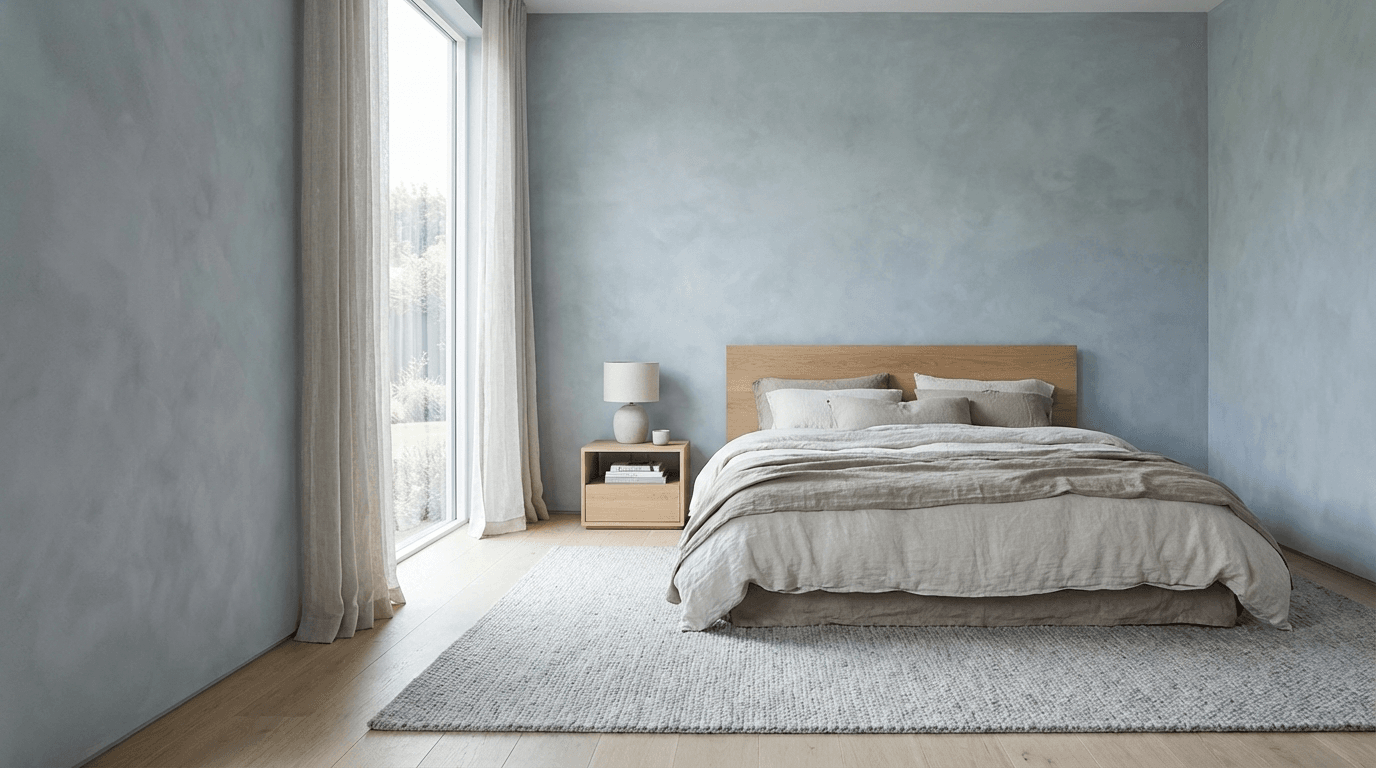
Limewash paint colors don't behave like regular paint colors. They breathe, shift, and react to light in ways that flat latex and even premium acrylics simply cannot replicate. That's what makes choosing the right limewash color both exciting and — if you're not sure what to expect — a little daunting.
At ATRIA USA, we've been helping homeowners and designers across Dallas, Texas, and the entire United States choose the perfect limewash paint colors since we first brought authentic Italian Pittura alla Calce from our parent factory, Colorificio Atria, in Sicily. In this guide, we'll walk you through the best limewash colors for 2026, explain why limewash looks so different from conventional paint, and show you how to choose the right shade for your space.
Why Color Matters with Limewash
With standard paint, color is predictable. You pick a swatch, roll it on the wall, and what you see is what you get — a flat, uniform plane of color. Limewash is fundamentally different. Because lime paint is mineral-based and applied by hand in thin, translucent layers, the finished surface has natural variation: areas of lighter and deeper tone, soft mottling, and a gentle texture that catches and releases light throughout the day.
This means your limewash color isn't a single shade — it's a range. A limewash wall in “warm white” might read as pearl in the morning, ivory at noon, and soft cream by candlelight. The same wall in sage green will feel cool and misty on an overcast day and warm and herbaceous when the Dallas afternoon sun pours through the windows.
This depth and movement is exactly what draws designers and homeowners to limewash. It creates walls that feel alive — surfaces with soul, character, and the unmistakable warmth of natural materials. But it also means that choosing your limewash paint colors requires a slightly different mindset than picking a paint chip at the hardware store.
Design tip: Always test limewash colors on a large sample area (at least 3' × 3') and observe it at different times of day. The way limewash interacts with your specific lighting conditions is part of its beauty — and part of the selection process. Visit our Color Visualizer to preview shades before committing.
Trending Limewash Colors for 2026
Based on our project work across Texas and consultations with designers nationwide, these are the limewash color ideas dominating modern interiors this year. Each one takes on unique character in lime paint — far more nuanced than anything you'd see on a flat paint swatch.
Warm White (Bianco Caldo)
The most requested limewash color — and for good reason. Warm white in lime paint is nothing like flat white latex. It shifts between ivory, pearl, and soft cream as light moves across the wall, creating a living surface that feels luminous without being stark. Perfect for open-concept living rooms and Dallas lofts flooded with natural light.
Greige
The sophisticated midpoint between gray and beige. In limewash, greige develops extraordinary depth — cool undertones emerge in shadow while warm notes glow in direct light. It's become a staple in modern Texas homes where neutral warmth meets contemporary restraint.
Blush Pink (Rosa Cipria)
Subtle, powdery, and undeniably elegant. Limewash blush isn't the millennial pink of a decade ago — it's earthier, more mineral, more grounded. The carbonation process softens the pigment naturally, creating a finish that looks like sun-faded Mediterranean plaster.
Sage Green (Salvia)
The botanical trend continues into 2026, and sage green limewash is leading the way. This muted, herbaceous tone brings organic calm to bedrooms and bathrooms. In lime paint, greens develop a complexity that feels gathered from nature — never synthetic.
Terracotta
Earthy, warm, and unmistakably Mediterranean. Terracotta limewash channels the sun-baked walls of Sicily — fitting, since that's exactly where our Pittura alla Calce is made. The mottled application creates a richness that flat terracotta paint simply cannot achieve.
Charcoal (Carbone)
Dark limewash is having a major moment. Charcoal in lime paint produces a dramatic, velvety surface with visible tonal variation — lighter where the trowel moved quickly, deeper in concentrated areas. Stunning as a feature wall in dining rooms and primary bedrooms.
Sky Blue (Cielo)
A washed, atmospheric blue that evokes wide Texas skies and coastal Italian villages alike. Sky blue limewash reads differently in every room — cool and airy in north-facing spaces, warm and dreamy in rooms bathed by afternoon sun.
Warm Cream (Crema)
Richer than white, softer than beige. Warm cream is the versatile workhorse of limewash colors — it complements wood floors, stone countertops, and linen furnishings effortlessly. It's the color we recommend most often for whole-home limewash projects.
Mushroom (Fungo)
A warm, organic taupe with gray-brown undertones. Mushroom limewash captures the quiet elegance of natural materials — think hand-thrown pottery or raw linen. It's particularly beautiful in bedrooms and reading nooks where cocooning comfort is the goal.
Clay (Argilla)
Deeper and more amber than terracotta, clay limewash brings warmth without heaviness. It pairs beautifully with matte black hardware, walnut wood, and concrete — a combination we see constantly in Dallas's most design-forward homes.
How Limewash Colors Look Different Than Paint Colors
If you've only ever used conventional paint, the way limewash colors behave on a wall can be surprising. Three factors make the difference:
Light Reactivity
Lime paint is naturally crystalline. As it cures, calcium hydroxide converts to calcium carbonate — essentially, the paint slowly turns to limestone on your wall. These microscopic crystals refract light, giving limewash its characteristic luminous, almost chalky glow. Flat latex absorbs light uniformly; limewash dances with it.
Layering & Depth
Limewash is applied in multiple thin coats — typically two to three — each slightly translucent. The layers don't perfectly align, which creates the gentle mottling and tonal variation that gives limewash its depth. Where the brush or trowel moved quickly, the layer is thinner and lighter. Where it lingered, the color is richer. This organic variation is what makes each limewash wall unique.
Carbonation Effects
As limewash cures (a process called carbonation), the color lightens by 30–40% from wet to dry. A freshly applied coat of charcoal limewash looks nearly black — give it 48 hours, and it settles into a sophisticated, mottled dark gray. This carbonation process also means the color continues to evolve subtly over the first few weeks, then stabilizes. Understanding this is critical when selecting your limewash paint colors — always judge the cured sample, never the wet application.
For a deeper dive into how limewash compares to conventional paint across durability, cost, and aesthetics, read our complete guide: Limewash vs. Paint: What's the Difference?
How to Choose the Right Limewash Color
Selecting the best limewash paint colors for your home isn't just about personal preference — it's about how the color will interact with your specific space. Here's what to consider:
Room Size & Proportions
Lighter limewash colors — warm whites, creams, and soft blush tones — open up smaller rooms and make low ceilings feel taller. The light-refracting quality of lime paint amplifies this effect. For larger spaces with generous ceilings (common in newer Dallas-area builds), richer tones like clay, mushroom, or charcoal add intimacy without making the room feel cramped.
Natural & Artificial Light
North-facing rooms receive cool, consistent light — limewash colors with warm undertones (cream, blush, clay) prevent the space from feeling cold. South- and west-facing rooms in Texas get intense afternoon sun, which can wash out very pale colors but brings extraordinary life to mid-tones like sage green, greige, and sky blue. Always evaluate samples in the actual room.
Existing Décor & Materials
Limewash is inherently natural and mineral-based, so it pairs beautifully with other natural materials: wood, stone, linen, leather, concrete. Consider your flooring, cabinetry, and furniture when choosing limewash colors. White oak floors? Warm cream or sage green. Dark walnut? Warm white or blush pink. Concrete countertops? Charcoal or mushroom creates a stunning tonal dialogue.
Pro tip: Not sure which direction to go? Try our online Color Visualizer to see how different limewash colors look in real room settings — or schedule a free color consultation at our Dallas showroom.
ATRIA's Custom Color Matching
While the ten colors above represent 2026's most popular limewash color ideas, you're not limited to a preset palette. At our Dallas facility, we operate an in-house tinting machine that allows us to custom-match virtually any color you can imagine — directly into our authentic Italian Pittura alla Calce base.
Bring us a fabric swatch, a paint chip from any brand, a Pantone reference, or even a photo from your mood board. Our team will formulate a custom limewash tint that matches your vision — with the same mineral depth and light-reactive beauty that only genuine lime paint can deliver.
Every batch is mixed using mineral pigments compatible with the alkaline chemistry of lime. This is critical — many DIY tinting attempts fail because conventional paint colorants break down in high-pH lime binders. Our pigments are specifically engineered for lime, imported alongside our Pittura alla Calce from Colorificio Atria in Sicily and tinted to your specification right here in Dallas.
Unlimited
Custom colors available
Same Day
Tinting turnaround
Since 1968
Colorificio Atria heritage
Ready to explore custom limewash colors? Browse our product catalog or contact us to discuss your project.
Frequently Asked Questions About Limewash Paint Colors
Does limewash come in dark colors?
Yes. Limewash can be tinted to deep charcoals, rich terracottas, dark blues, and even near-black tones. Keep in mind that dark limewash colors show more tonal variation than light ones — which is often the entire point. The mottled depth of a dark limewash wall is one of the most striking finishes available in interior design today.
Will my limewash color fade over time?
Interior limewash is extremely color-stable. The mineral pigments are bound within the crystalline calcium carbonate matrix as the paint carbonates, essentially locking the color into stone. Interior limewash walls can maintain their color for decades. Exterior applications may lighten gradually with UV exposure, though many homeowners consider this natural patina part of lime's charm.
Can I paint limewash over existing paint?
Limewash bonds best to porous, mineral substrates — bare plaster, unpainted drywall, brick, and stone. If your walls have existing latex or acrylic paint, a bonding primer is typically required to create a surface the lime can grip. Our limewash application service includes full surface preparation to ensure proper adhesion regardless of your starting point.
How many coats of limewash do I need?
Most limewash paint colors achieve their ideal depth in two to three coats. Lighter colors may look beautiful after two coats, while darker or more saturated shades often benefit from a third coat for fuller coverage and richer variation. Each coat should dry completely (typically 4–6 hours) before the next is applied.
Can ATRIA match a specific color I've seen?
Almost certainly. Our in-house tinting system can match any reference — Benjamin Moore, Farrow & Ball, Sherwin-Williams, Pantone, or a physical sample. Bring it to our Dallas location or mail it in, and we'll create a custom limewash tint in our Pittura alla Calce base. Get in touch to start the process.
Find Your Perfect Limewash Color
The best limewash paint colors aren't just colors — they're experiences. The way lime paint interacts with light, layers, and the mineral chemistry of carbonation creates a finish that conventional paint will never replicate. Whether you're drawn to the quiet elegance of warm white, the earthy richness of terracotta, or the dramatic depth of charcoal, limewash transforms walls from flat surfaces into living, breathing elements of your design.
Explore our complete limewash services, preview colors in our Color Visualizer, or visit us in Dallas to see — and touch — the difference authentic Italian limewash makes.
Ready to Choose Your Limewash Color?
Visit our Dallas showroom to see limewash samples in person, or schedule a free color consultation. We'll help you find the perfect shade for your space.