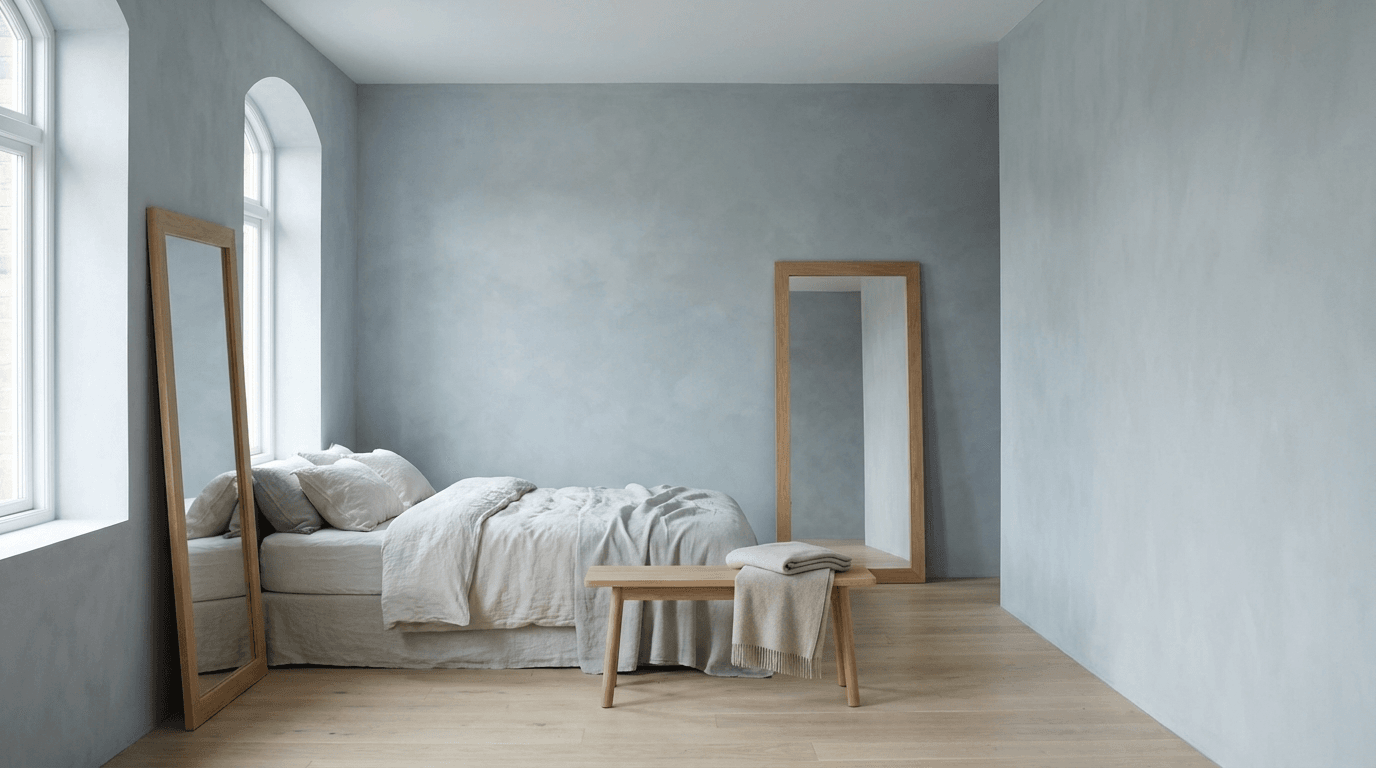
Walk through any high-end neighborhood in Dallas — or scroll through a design-focused Instagram feed — and you'll notice walls with a soft, chalky depth that flat paint simply can't replicate. That finish is limewash. But when it comes to choosing between limewash vs paint for your own home, the decision isn't always straightforward. They look different, they're made from completely different materials, they cost different amounts, and they age in entirely different ways.
In this guide, we'll break down everything you need to know about limewash vs regular paint — from composition and application to cost, durability, and environmental impact. Whether you're renovating a historic home in the M Streets or building new construction in Frisco, this comparison will help you make the right choice.
What Is Limewash?
Limewash is one of the oldest paint finishes in human history. At its core, it's remarkably simple: slaked lime (calcium hydroxide) mixed with water, sometimes with natural mineral pigments added for color. That's it. No plastic resins, no synthetic binders, no volatile organic compounds.
When limewash is applied to a porous surface — brick, stone, stucco, raw plaster — something remarkable happens. The calcium hydroxide reacts with carbon dioxide in the air through a process called carbonation. Over days and weeks, the limewash literally turns back into limestone (calcium carbonate), bonding chemically with the substrate rather than sitting on top of it like a film. This is why limewash on centuries-old European buildings still looks beautiful — it becomes part of the wall itself.
The result is a luminous, matte finish with natural variation and depth. Light passes into the crystalline surface and reflects back at different angles, creating that coveted, lived-in glow that no synthetic paint can truly replicate.
ATRIA's Pittura alla Calce is an authentic Italian limewash produced by Colorificio Atria in Partanna, Sicily. It's made from aged lime putty — not powdered hydrated lime — which produces a finer, creamier consistency and a more refined finish. It's zero VOC, naturally antibacterial, and fully breathable. We import it directly to our Dallas warehouse, making it one of the few genuine European limewash products available in the US market.
What Is Regular Paint?
Modern paint — whether latex, acrylic, or alkyd — is a synthetic coating. It consists of pigments suspended in a binder (typically acrylic or vinyl-acrylic resin) carried by water or solvent. When applied, the water or solvent evaporates, and the plastic resin forms a continuous film on the surface.
This film sits on top of the substrate. It doesn't bond chemically the way limewash does — it adheres mechanically, gripping the surface through friction and surface tension. Paint is engineered for consistency: uniform color, predictable coverage, and standardized sheens from flat to high-gloss.
Modern paint is incredibly versatile, works on almost any surface (wood, drywall, metal, masonry), and comes in virtually any color imaginable. It's the default wall coating for good reason — it's affordable, widely available, and easy to apply.
Key Differences: Limewash vs Regular Paint
Understanding the fundamental differences between limewash vs regular paint helps clarify why they produce such different results — and why one may be dramatically better suited to your project.
| Feature | Limewash | Regular Paint |
|---|---|---|
| Composition | Natural lime + water + mineral pigments | Synthetic resins, pigments, solvents |
| How it bonds | Carbonation — becomes part of the wall | Mechanical film — sits on top |
| VOCs | Zero | Low to high (varies by brand) |
| Breathability | Fully breathable — moisture passes through | Seals the surface — traps moisture |
| Finish | Matte, textured, natural variation | Uniform — flat through high-gloss |
| Antibacterial | Yes — high pH inhibits mold & bacteria | No (unless additives are used) |
| Compatible surfaces | Porous: brick, stone, stucco, lime plaster | Almost any: drywall, wood, metal, masonry |
| Application | Brush, multiple thin coats | Brush, roller, or spray, 1–2 coats |
| Color range | Muted, earth-tone palette | Unlimited |
| Lifespan | 15–20+ years (exterior), longer interior | 5–10 years before repainting |
| Cost installed | $8–18/sqft | $2–5/sqft |
The most important distinction is breathability. Limewash allows moisture vapor to pass freely through the wall, which is critical for older masonry buildings and humid climates like those we deal with here in Texas. Regular paint traps moisture behind the film, which can lead to blistering, peeling, and even structural damage over time — especially on exterior brick and stucco.
Pros and Cons of Limewash
Limewash Advantages
- ✓Mineral-based and low-odor — comfortable during and after application
- ✓Naturally antibacterial — high alkalinity inhibits mold, mildew, and bacteria growth
- ✓Fully breathable — lets walls release trapped moisture, preventing damage
- ✓Develops beautiful patina over time — ages gracefully rather than peeling
- ✓Bonds chemically through carbonation — becomes part of the substrate
- ✓Eco-friendly and sustainable — made from abundant natural limestone
- ✓Unique depth and luminosity that synthetic paint cannot replicate
- ✓Extremely long-lasting on exterior masonry (15–20+ years)
Limewash Limitations
- ✕Only works on porous, mineral substrates — not suitable for drywall, wood, or metal without special prep
- ✕Limited color palette compared to synthetic paint (muted, mineral-based tones)
- ✕Requires multiple thin coats (3–4 typically) and skilled application
- ✕Higher upfront cost than regular paint
- ✕Color appears different wet vs dry — requires experience to predict final result
Pros and Cons of Regular Paint
Paint Advantages
- ✓Works on virtually any surface — drywall, wood, metal, masonry, and more
- ✓Unlimited color options with precise, repeatable color matching
- ✓Easy to apply — DIY-friendly with basic tools
- ✓Low upfront cost ($2–5/sqft installed)
- ✓Wide range of sheens from flat to high-gloss
- ✓Fast application — one to two coats with same-day results
Paint Limitations
- ✕Traps moisture — can cause peeling, blistering, and hidden damage on masonry
- ✕Contains VOCs (even "low-VOC" formulas contain some synthetic compounds)
- ✕Peels and flakes over time — requires scraping and repainting every 5–10 years
- ✕Flat, uniform appearance — lacks the depth and character of mineral finishes
- ✕Not breathable — problematic for older buildings and humid climates
Where Each Finish Works Best
Is limewash better than paint? It depends entirely on the application. Neither is universally superior — they're fundamentally different materials designed for different purposes. Here's where each excels:
Choose Limewash When:
Exterior brick facades
Breathable, bonds chemically, ages beautifully
Stucco & stone walls
Traditional look with superior moisture management
Interior feature walls
Over lime plaster or brick for textured, layered depth
Historic restorations
Historically accurate and protects old masonry
Health-conscious spaces
Naturally breathable, antibacterial — nurseries, bedrooms, kitchens
High-end exteriors
That European, old-world aesthetic clients love
Choose Paint When:
Interior drywall
Standard residential interiors, bedrooms, hallways
Wood trim & doors
Limewash won't adhere to non-porous wood
Metal surfaces
Railings, fixtures, metal doors
Budget renovations
When cost is the primary constraint
Exact color matching
Corporate branding, uniform multi-room color
Quick turnaround
When you need walls done in a day
Many of our Dallas-area clients use both — limewash on the exterior brick and key interior feature walls, with high-quality paint on drywall, trim, and ceilings. The two materials complement each other beautifully when used in the right places.
Cost Comparison: Limewash vs Paint
Let's be transparent about cost, because this is where many homeowners hesitate. Limewash is a premium finish and it's priced accordingly:
| Cost Factor | Limewash | Regular Paint |
|---|---|---|
| Material cost | $2–5/sqft | $0.50–1.50/sqft |
| Professional installation | $8–18/sqft total | $2–5/sqft total |
| Coats required | 3–4 thin coats | 1–2 coats |
| Repainting frequency | Every 15–20+ years | Every 5–10 years |
| Lifetime cost (30 years) | Lower — one application lasts | Higher — 3–6 repaintings |
The upfront cost of limewash is 3–5x higher than paint. But consider the long game: a properly applied limewash finish on exterior brick can last 15–20 years or more without repainting. Paint on the same surface will peel and need recoating every 5–10 years. Over a 30-year period, limewash often costs less than paint when you factor in repeated labor and material costs.
The installed cost also depends on product quality. Many domestic brands market "limewash" products that are actually lime-tinted acrylic paints — they're cheaper, but they don't carbonate, they're not breathable, and they won't deliver the authentic finish or longevity of true limewash. Authentic Italian lime products like ATRIA's Pittura alla Calce cost more upfront because they're made from properly aged lime putty — not a quick substitute designed to mimic the look without the chemistry.
A Note on Authenticity: Not All "Limewash" Is the Same
The growing popularity of limewash has led to a flood of products labeled "limewash" that aren't truly lime-based. Some American-made alternatives blend lime with acrylic resins to make application easier and mimic the aesthetic — but the moment you add synthetic binders, you compromise the core benefits: breathability, carbonation bonding, and the antibacterial properties of pure lime.
If you're investing in limewash for its performance characteristics — not just its look — the formulation matters. Products from the Italian and European tradition, where lime has been used for millennia, tend to adhere closely to the pure lime chemistry. That's why we chose to partner with Colorificio Atria: their Pittura alla Calce is pure aged lime putty and mineral pigments, produced the way Italian artisans have done it for centuries. No acrylic fillers, no shortcuts.
For projects where the aesthetic alone is what matters and the surface is drywall rather than masonry, a lime-style paint may be perfectly adequate. But for exterior brick, stucco, and stone — where breathability and longevity are critical — we always recommend authentic limewash. Explore our full range of Italian lime finishes, including Venetian plaster and decorative stuccos, on our products page.
Frequently Asked Questions
Can you apply limewash over existing paint?
Generally, no. Limewash needs a porous, mineral substrate to bond through carbonation. If your brick or stucco has been previously painted with acrylic or latex paint, that film prevents the lime from reaching the masonry. The paint must be fully removed first — often through chemical stripping or media blasting — before limewash can be applied. This is one reason we always assess the existing surface condition before quoting a limewash project.
Is limewash better than paint for exterior brick?
For exterior brick, limewash is almost always the better choice. It allows the brick to breathe, preventing the moisture entrapment that causes paint to peel and masonry to deteriorate. In a climate like North Texas — with hot, humid summers and freeze-thaw cycles in winter — breathability is essential. Painting exterior brick with conventional paint is one of the most common (and costly) mistakes homeowners make.
How long does limewash last compared to paint?
On exterior masonry, a quality limewash application lasts 15–20 years or more. Interior limewash can last decades with minimal maintenance. By contrast, exterior paint typically needs recoating every 5–10 years. Limewash doesn't peel or flake the way paint does — it gradually weathers and can be refreshed with a single new coat rather than stripping and starting over.
Can limewash be used on interior drywall?
Traditional limewash does not bond well to standard drywall because the paper surface isn't sufficiently porous or mineral-based. However, if you apply a lime-based plaster or mineral primer over the drywall first, limewash can then be applied on top. This is a common approach for interior feature walls where clients want the authentic limewash aesthetic. It adds cost and complexity, which is why many designers use limewash selectively on focal walls rather than throughout an entire home.
Is limewash safe for children and pets?
Absolutely. Authentic limewash like ATRIA's Pittura alla Calce contains zero VOCs and no synthetic chemicals. Once cured (carbonated), the surface is inert calcium carbonate — essentially limestone. There are no off-gassing concerns, making it one of the safest wall finishes available, particularly for nurseries, children's rooms, and homes with allergy sensitivities.
The Bottom Line: Limewash vs Paint
Limewash and paint are not competitors — they're different tools for different jobs. Paint is the practical workhorse for interior drywall, wood, and metal. Limewash is the artisan choice for masonry, brick, and stone where breathability, longevity, and natural beauty matter most.
If you're considering limewash for your home — whether it's a full exterior transformation or a single statement wall — we'd love to help. Browse our limewash services, explore our Italian lime products, or contact us for a free consultation. We serve the entire Dallas-Fort Worth metroplex and ship products nationwide.
Considering Limewash for Your Home?
Send us photos of your project and we'll provide a free consultation and detailed estimate within 24 hours.